

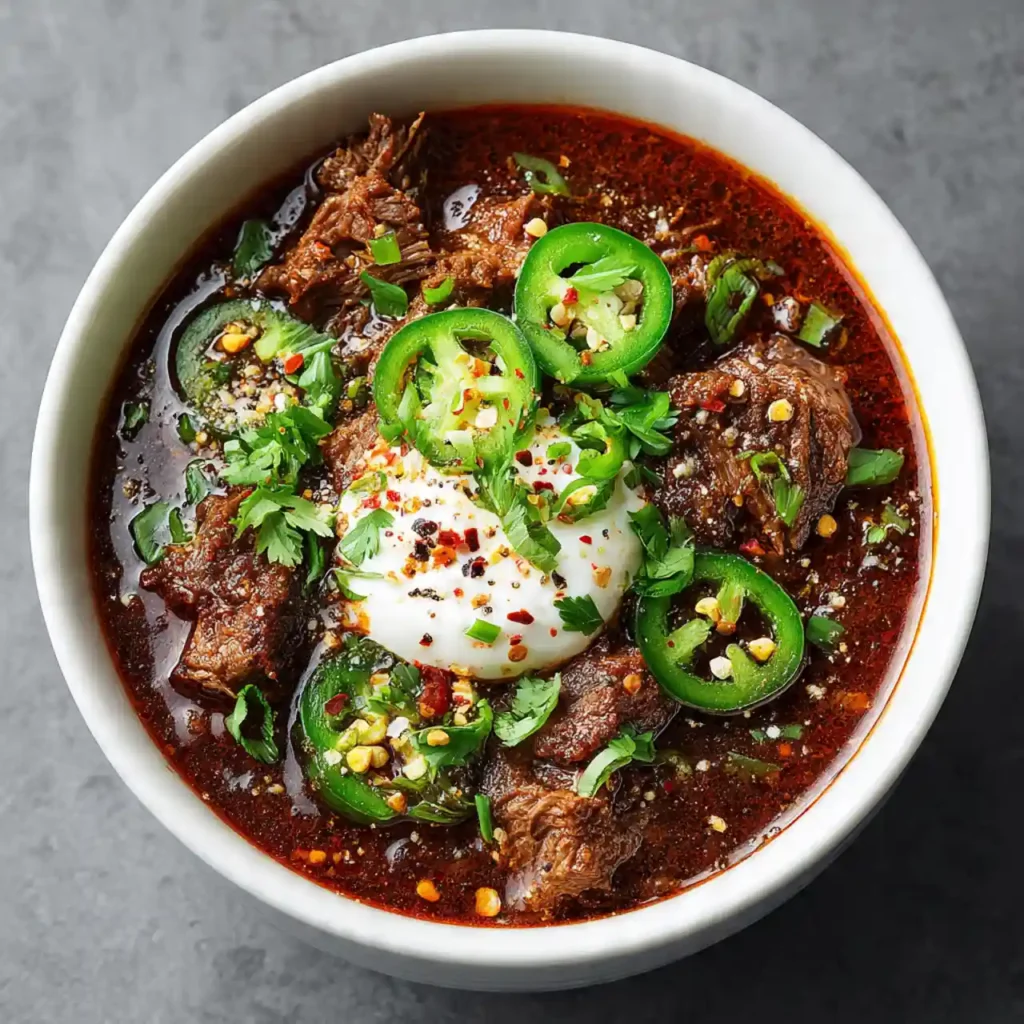
Texas chili is a traditional beef chili made with dried chiles and spices, without beans or tomatoes.
Often called Texas Red, this slow-simmered dish focuses on tender chunks of beef and deep chile flavor, creating a rich, hearty bowl that’s bold, savory, and rooted in Texas cooking tradition.
What Makes Texas Chili Different
Texas chili is defined as much by what it doesn’t include as what it does.
There are:
- No beans
- No tomatoes as the main base
- No sweetness
Instead, the focus is on beef and dried chiles. The sauce comes from rehydrated chile peppers blended into a paste, not from tomato sauce. The result is a chili that’s smoky, savory, and intense without being spicy for the sake of heat.
Direct opinion: if your chili tastes like stew with cumin, it’s not Texas chili.
Flavor Profile You Should Expect
A proper Texas chili should taste:
- Deeply beefy, not watery
- Smoky and earthy, from dried chiles
- Rich and savory, without sweetness
- Warm, not harsh, even if it has heat
It should coat a spoon, cling to the meat, and leave you wanting another bite immediately.
Ingredient Insights (No Measurements)
Beef
Texas chili demands chunks of beef, not ground meat. Chuck roast is the gold standard because it becomes tender and flavorful with slow cooking. The beef should be cut into bite-sized cubes- not shredded, not minced.
Dried Chiles
This is where the soul of the chili lives. A combination of ancho, guajillo, and pasilla chiles gives depth, smokiness, and mild heat. Fresh chili powder can work in a pinch, but dried chiles create a flavor you simply can’t fake.
Aromatics
Onion and garlic build the base. They should soften and sweeten naturally-no browning needed.
Spices
Cumin is essential, but restraint matters. Mexican oregano adds earthiness, and black pepper rounds things out. This chili doesn’t need a long spice list- it needs balance.
Liquid
Beef broth or stock is used sparingly. Texas chili is thick and concentrated, not soupy.
Step-by-Step: How to Make Texas Chili
Step 1: Prepare the Chiles
Remove stems and seeds from the dried chiles. Toast them briefly in a dry pan until fragrant, then soak them in hot water until softened. Blend into a smooth paste.
This paste is the backbone of the chili. Take your time here.
Step 2: Brown the Beef
Season the beef lightly with salt and sear it in batches until deeply browned. Don’t overcrowd the pot. Those browned bits are flavor you’ll build on later.
Remove the beef and set it aside.
Step 3: Build the Base
In the same pot, cook onions until soft and translucent. Add garlic and cook briefly. Stir in spices and toast gently to release aroma without burning.
Step 4: Combine and Simmer
Return the beef to the pot and stir in the chile paste. Add just enough broth to loosen everything slightly. Bring to a gentle simmer.
This is where patience pays off. Low heat, uncovered or partially covered, for several hours.
Step 5: Let It Develop
As the chili cooks, the beef becomes tender and the sauce thickens naturally. Stir occasionally and adjust seasoning near the end.
The chili should look dark, glossy, and rich-not watery.
Common Mistakes That Ruin Texas Chili
- Adding beans (instant disqualification)
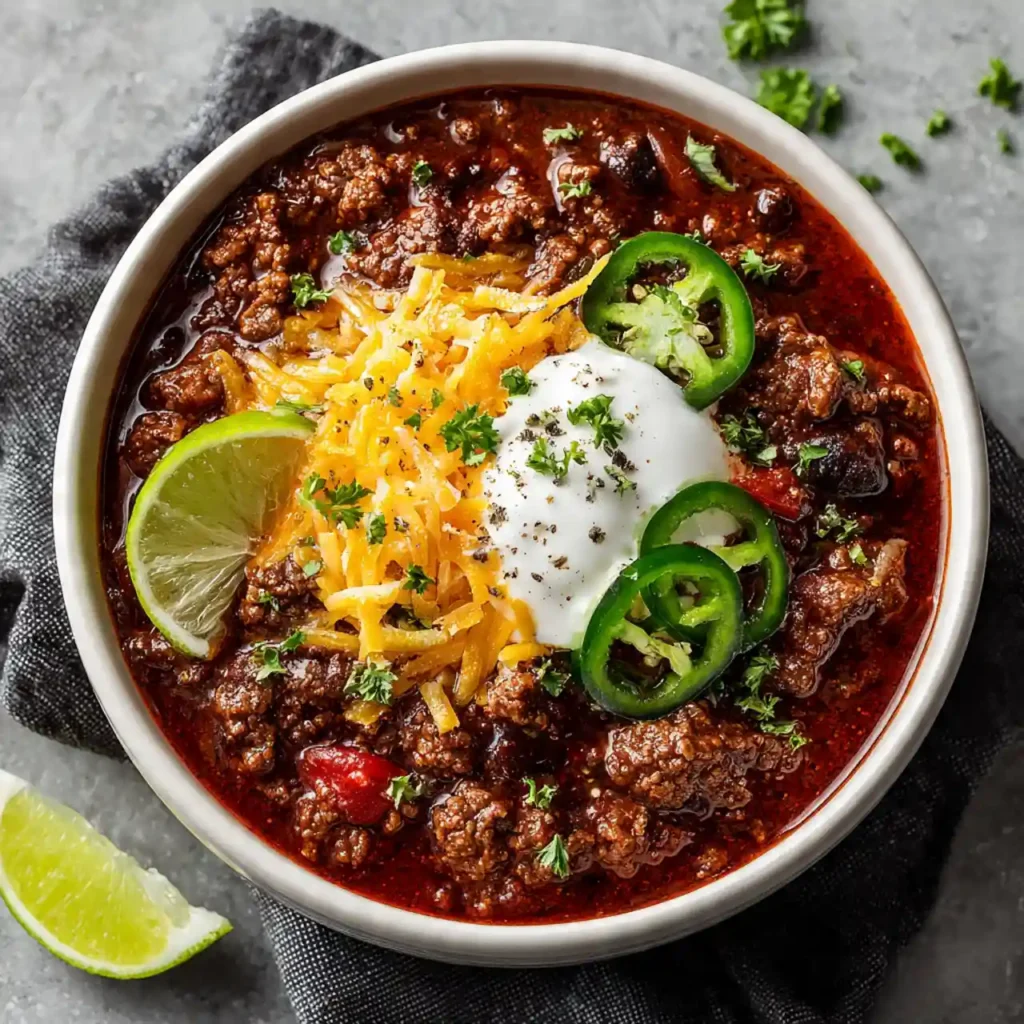
- Using ground beef instead of chunks
- Relying only on chili powder
- Boiling aggressively instead of slow simmering
- Adding sugar or tomatoes to “balance” flavor
Texas chili doesn’t need fixing-it needs time.
How Texans Serve Chili
Texas chili is traditionally served plain or with simple accompaniments:
- Diced onions
- Shredded cheese (controversial but common)
- Saltine crackers or cornbread
- Pickled jalapeños
It’s often eaten as-is, with a spoon, standing around a table or fire, arguing about whose chili is better.
Storage and Reheating Tips
Texas chili is better the next day.
- Store in the fridge for up to 4 days
- Reheat slowly on the stove
- Add a splash of broth if it thickens too much
It also freezes beautifully for up to 3 months.
Nutrition Information (Per Serving)
| Nutrient | Amount |
|---|---|
| Calories | 480 kcal |
| Protein | 38 g |
| Fat | 32 g |
| Saturated Fat | 12 g |
| Carbohydrates | 8 g |
| Sugar | 2 g |
| Sodium | 720 mg |
Variations (Without Breaking the Rules)
Spicy Texas Chili
Add extra dried chiles or a pinch of cayenne- never hot sauce.
Competition-Style Chili
Blend the sauce extra smooth and skim excess fat for a glossy finish.
Smoky Version
Use smoked paprika or smoked chiles sparingly.
FAQs
Is Texas chili really made without beans?
Yes. Beans are not traditional and are widely rejected in Texas-style chili.
Is it spicy?
It can be, but authentic Texas chili focuses on flavor first, heat second.
Can I use chili powder instead of dried chiles?
You can, but the depth and richness won’t be the same.
Why no tomatoes?
Tomatoes mask the chile flavor and change the texture. Texas chili relies on chiles for its body.
What cut of beef is best?
Chuck roast is ideal- it becomes tender without falling apart.
Texas Chili (Authentic No-Bean Texas Red)
Ingredients
Method
- Remove stems and seeds from dried chiles. Toast briefly in a dry skillet until fragrant, then soak in hot water until softened. Blend into a smooth paste.
- Season the beef with salt. Heat oil in a heavy pot and brown the beef in batches until deeply browned. Remove and set aside.
- In the same pot, cook the onion until soft. Add garlic and cook until fragrant.
- Stir in cumin, oregano, and black pepper, then add the chile paste.
- Return the beef to the pot and add beef broth. Stir well.
- Bring to a gentle simmer, reduce heat, and cook uncovered for about 2 hours, stirring occasionally, until the beef is tender and the chili is thick.
- Adjust seasoning with salt and serve hot.
Notes
- This is an authentic Texas-style chili—beans and tomatoes are not traditional.
- Chuck roast is ideal for tenderness and flavor.
- Chili tastes even better the next day as flavors deepen.
- Store leftovers in the refrigerator for up to 4 days or freeze for up to 3 months.