
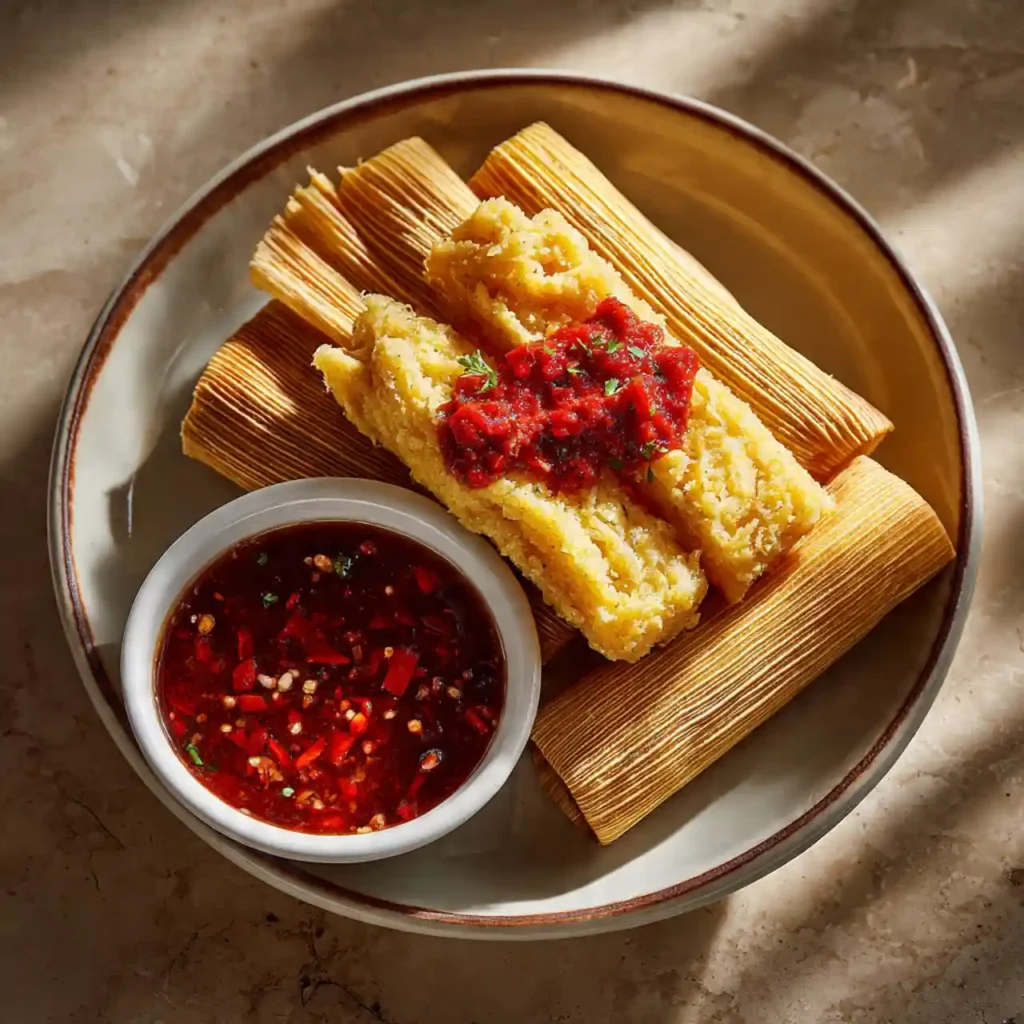
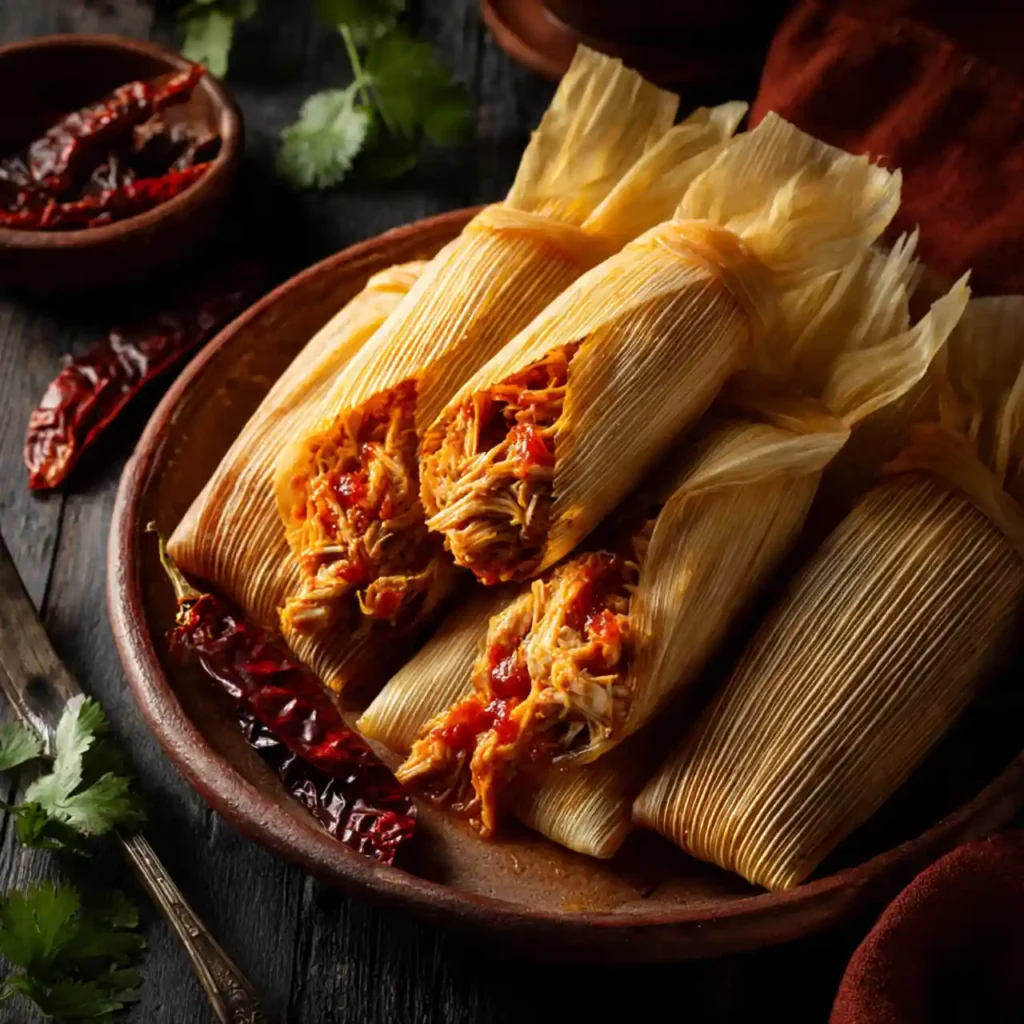
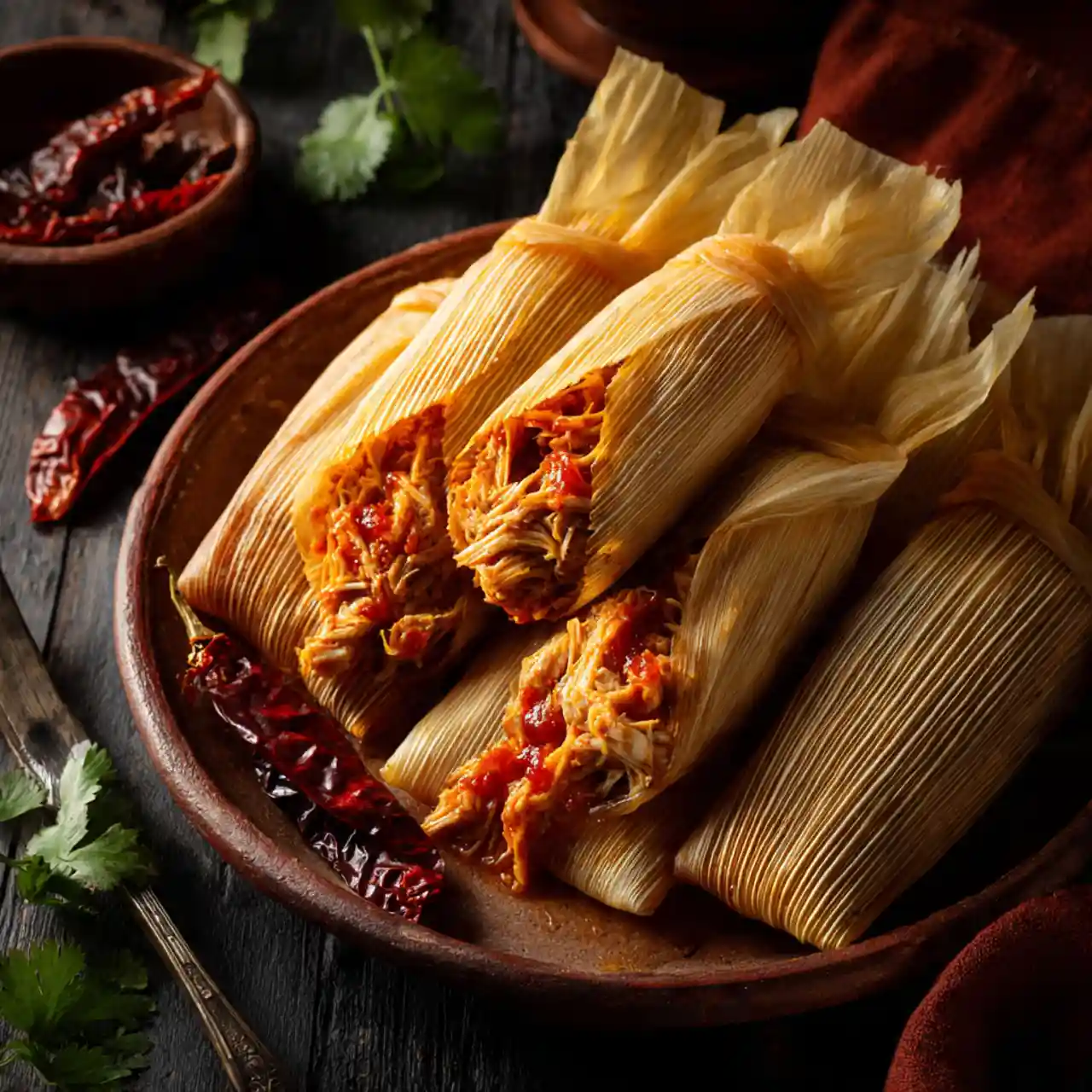
Red pork tamales are traditional Mexican tamales filled with shredded pork cooked in a rich red chile sauce, wrapped in corn husks, and steamed until tender.
Also known as tamales rojos, they feature soft masa and deeply savory flavor from dried red chiles, making them a classic choice for holidays and celebrations.
What Makes Tamales Rojos Special
Red pork tamales stand out because of their depth of flavor. While green tamales lean bright and tangy, tamales rojos are darker, warmer, and more savory.
The red sauce is typically made from dried chiles like guajillo, ancho, or pasilla. These chiles don’t just add heat-they add color, aroma, and a subtle smokiness that defines the filling. Combined with slow-cooked pork, the result is bold but balanced, never harsh.
Direct opinion: if you love comfort food with real character, tamales rojos are hard to beat.
Flavor and Texture You Should Expect
Well-made red pork tamales should be:
- Soft and fluffy masa, never dry
- Tender, juicy pork, not stringy
- Deeply savory sauce with gentle heat
- Balanced, where no single element overwhelms
If the masa is dense or the filling tastes flat, it’s usually a texture or seasoning issue-not the recipe itself.
Ingredient
Pork
Pork shoulder or pork butt is ideal. These cuts become tender and flavorful with slow cooking and don’t dry out easily. Shred the pork rather than chopping it-this helps it absorb the red sauce.
Dried Red Chiles
Guajillo adds brightness, ancho adds mild sweetness, and pasilla brings depth. The blend matters more than heat level. The sauce should be rich and smooth, not sharp or bitter.
Masa
Masa harina mixed with broth and fat creates the base. Texture is everything here-it should be soft, spreadable, and light. Dense masa leads to heavy tamales.
Corn Husks
Corn husks act as both wrapper and steamer. Fully softened husks are easier to work with and help the tamales cook evenly.
Step-by-Step: How to Make Red Pork Tamales
Step 1: Soak the Corn Husks
Soak dried corn husks in hot water until pliable. Keep them submerged so they don’t dry out while you work. This makes assembly much smoother later.
Step 2: Cook and Shred the Pork
Simmer the pork gently until it’s fork-tender. Shred it into small pieces and reserve some of the cooking liquid-it’s liquid gold for both the sauce and the masa.
Step 3: Make the Red Chile Sauce
Toast the dried chiles briefly until fragrant, then soak until softened. Blend with garlic, onion, and seasoning until smooth. Simmer the sauce to mellow the flavors and remove any raw edge.
Stir the shredded pork into the sauce and let it cook together so the meat absorbs all that flavor.
Step 4: Prepare the Masa
Whip the fat until light, then mix in masa harina, seasoning, and warm broth until the mixture is soft and fluffy. A small piece of masa should float in water-this is a classic sign it’s ready.
Step 5: Assemble the Tamales
Spread masa onto the smooth side of a corn husk. Spoon a line of pork filling down the center. Fold the sides inward, then fold the bottom up to seal.
Don’t overfill-tamales need room to steam properly.
Step 6: Steam Until Perfect
Stand the tamales upright in a steamer and cook until the masa pulls away cleanly from the husk. This takes time, but patience here makes all the difference.
Let the tamales rest briefly after steaming. They firm up and improve in texture as they cool.
Common Mistakes to Avoid
- Dry masa: leads to crumbly tamales
- Overfilling: causes leaks and uneven cooking
- Under-steaming: masa will stick to the husk
- Bitter sauce: chiles were over-toasted
- Skipping rest time: texture improves after steaming
How to Serve Tamales Rojos
Tamales rojos are often served simply, letting the flavors shine. Popular accompaniments include:
- Extra red salsa on the side
- Mexican crema or sour cream
- Rice and beans
- Hot coffee, champurrado, or atole
They’re just as welcome at breakfast as they are at dinner.
Nutrition (Per Tamale)
| Nutrient | Amount |
|---|---|
| Calories | 315 kcal |
| Protein | 15 g |
| Fat | 17 g |
| Saturated Fat | 5 g |
| Carbohydrates | 27 g |
| Sugar | 2 g |
| Sodium | 540 mg |
Storage and Reheating Tips
Tamales are excellent for make-ahead meals.
- Refrigerate cooked tamales for up to 4 days
- Freeze for up to 3 months
- Reheat by steaming for best texture
- Avoid microwaving if possible-it dries the masa
Frozen tamales can be reheated directly from the freezer.
Variations You Can Try
Spicy Tamales Rojos
Add extra dried chiles or a hotter variety to the sauce.
Extra Saucy Filling
Add a bit more chile sauce to the pork for ultra-moist tamales.
Pork and Bean Filling
Not traditional everywhere, but common in some regions.
Chicken Tamales Rojos
Swap pork for shredded chicken using the same red sauce.
FAQs
Are red pork tamales spicy?
Usually mild to medium. Heat depends on the chiles used.
Can I make tamales ahead of time?
Yes. Tamales are often better the next day.
Why is my masa heavy?
It likely needs more liquid or fat, or more mixing.
Can I use chili powder instead of dried chiles?
You can, but dried chiles give much better flavor and depth.
Are tamales rojos traditional?
Yes. They’re one of the most classic and widely loved tamale varieties.
Red Pork Tamales (Tamales Rojos)
Ingredients
Method
- Soak corn husks in warm water until soft and pliable. Set aside.
- Cook pork in lightly salted water until fork-tender. Shred and reserve cooking broth.
- Remove stems and seeds from dried chiles. Toast briefly, then soak in hot water until softened.
- Blend chiles with onion, garlic, cumin, black pepper, and salt until smooth.
- Simmer the red sauce for 10 minutes, then stir in shredded pork. Set aside.
- In a large bowl, beat lard or shortening until fluffy. Mix in masa harina, baking powder, and salt.
- Gradually add warm broth and mix until masa is soft and spreadable.
- Spread masa onto the smooth side of a corn husk. Add pork filling down the center.
- Fold sides inward and fold the bottom up to seal.
- Stand tamales upright in a steamer and steam for 90 minutes, or until the masa pulls away easily from the husk.
- Let tamales rest for 10 minutes before serving.
Notes
- Masa should be soft and fluffy; dry masa leads to dense tamales.
- Do not overfill-too much filling causes leaks during steaming.
- Tamales are done when the masa releases cleanly from the husk.
- Store cooked tamales in the refrigerator for up to 4 days or freeze for up to 3 months. Reheat by steaming.