
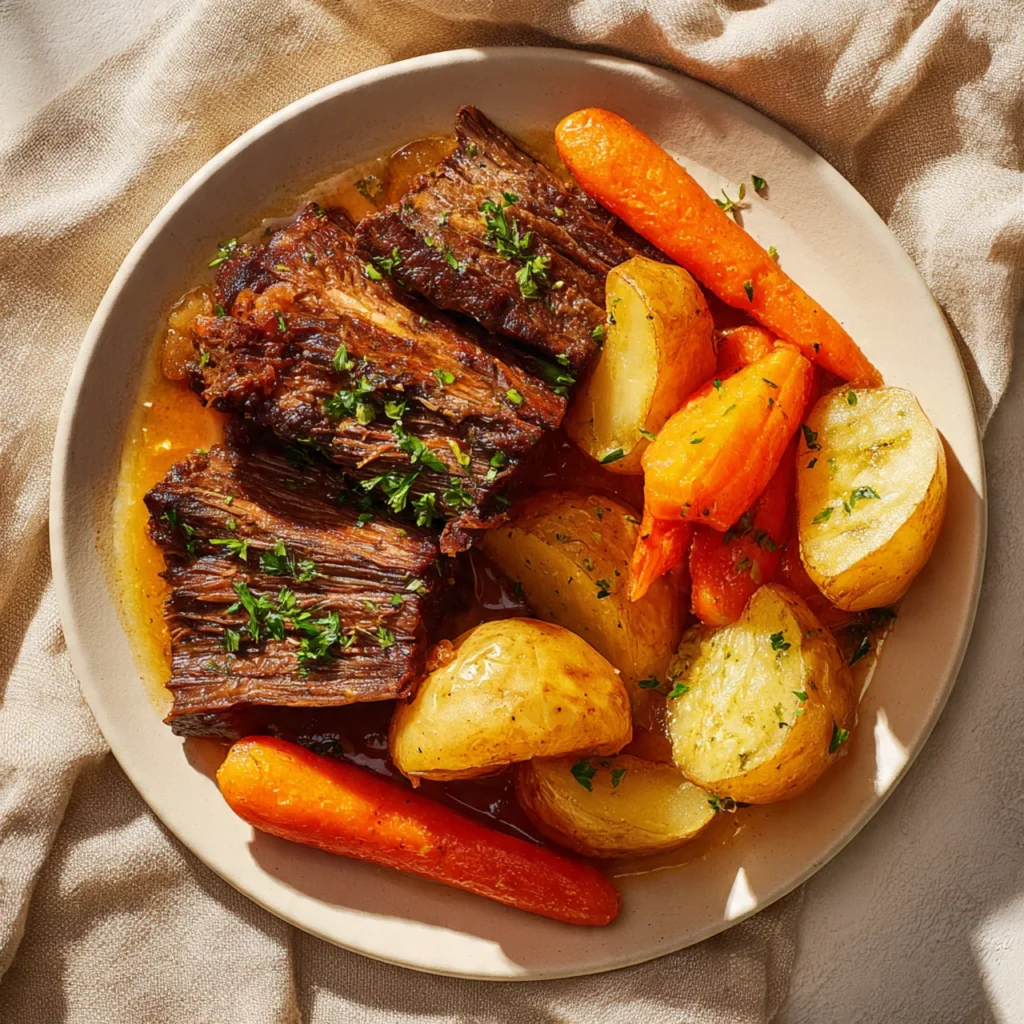
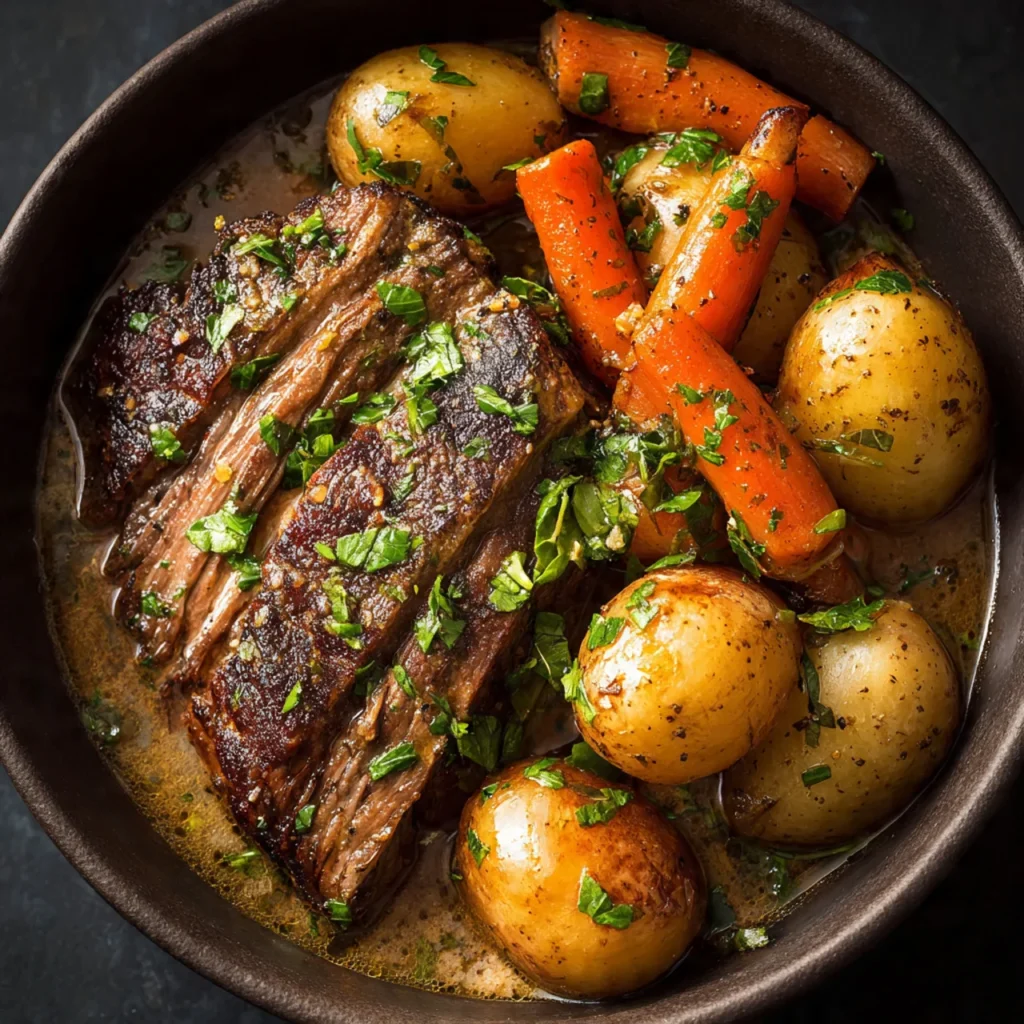
Pot roast is a slow-cooked beef dish made by braising a tough cut of meat with vegetables and broth until tender.
The low-and-slow cooking method breaks down the beef, creating a rich, comforting meal with deep flavor and fork-tender texture.
What Makes Pot Roast Special
Pot roast isn’t about a specific recipe-it’s about a method. A tough cut of beef, slow-cooked with liquid and vegetables until it becomes something completely different from where it started. The transformation is the magic.
This dish works because it respects time. Instead of fighting against a tougher cut of meat, pot roast leans into it. The long, gentle cooking breaks down connective tissue, turning something firm and unassuming into meat that pulls apart with a spoon. The vegetables soften, the broth deepens, and everything in the pot starts to taste like it belongs together.
Direct opinion: pot roast is one of the best examples of how patience can be an ingredient.
Flavor and Texture You Should Expect
A properly made pot roast should be:
- Fork-tender, never chewy
- Rich and savory, without being heavy
- Deeply comforting, with flavors that feel familiar
- Balanced, where meat, vegetables, and gravy all matter
It shouldn’t taste rushed. It shouldn’t taste thin. And it definitely shouldn’t taste dry.
Ingredient
Beef
Chuck roast is the classic choice, and for good reason. It has enough fat and connective tissue to stay moist and become tender over long cooking. Lean cuts won’t give you the same result-they dry out before they soften.
Vegetables
Carrots, onions, and potatoes are traditional, but they also serve a purpose. They release sweetness as they cook and help thicken the cooking liquid naturally. They’re not just sides-they’re part of the sauce.
Liquid
Broth, stock, or even water can work, but the key is not drowning the meat. Pot roast braises, it doesn’t boil. The liquid should come up partway, not completely cover the beef.
Seasoning
Salt, pepper, garlic, and herbs like thyme or bay leaf are usually enough. Pot roast isn’t about bold spice-it’s about depth that builds slowly.
The Heart of the Process: Slow Cooking
Pot roast can be made in the oven, on the stovetop, or in a slow cooker, but the philosophy stays the same: low heat, long time.
Step 1: Searing the Meat
This step matters more than people think. Browning the beef before slow cooking adds flavor that can’t be replicated later. Those dark bits on the bottom of the pot become the foundation of the gravy.
Step 2: Building the Base
Once the meat is browned, onions and garlic usually go in next. They soften, pick up the browned flavor, and create a savory base that everything else builds on.
Step 3: The Long Simmer
The roast goes back into the pot with liquid and herbs, and then it’s time to let heat and time do their work. This is not the moment to rush. Pot roast doesn’t respond well to impatience.
As it cooks, the meat relaxes. The broth thickens slightly. The flavors start to round out. Somewhere along the way, the kitchen begins to smell like comfort.
Why Pot Roast Is Perfect for Busy Lives
Ironically, pot roast is ideal for people who don’t want to think too much about dinner. Once it’s in the oven or slow cooker, it mostly takes care of itself. You don’t need to hover. You don’t need to stir constantly. You just need to give it enough time.
That’s why pot roast has lasted through generations-it fits real life. You can start it in the afternoon and forget about it until evening. You can make it on a weekend and enjoy leftovers for days. It doesn’t demand perfection, just attention at the beginning and patience afterward.
Common Mistakes to Avoid
- Using a lean cut of beef: it won’t become tender
- Skipping the sear: you lose depth of flavor
- Cooking at too high a temperature: dries the meat
- Adding too much liquid: results in weak flavor
- Not seasoning enough: large cuts need salt
Pot roast forgives a lot, but these mistakes show up in the final result.
Nutrition (Per Serving)
| Nutrient | Amount |
| Calories | 480 kcal |
| Protein | 38 g |
| Fat | 28 g |
| Saturated Fat | 11 g |
| Carbohydrates | 20 g |
| Fiber | 4 g |
| Sodium | 720 mg |
How to Know When Pot Roast Is Done
Pot roast doesn’t follow a strict timer-it follows texture. When it’s ready, a fork should slide in easily and twist without resistance. If it still feels tight or springy, it needs more time. There’s no shame in that. More time is often the answer.
Letting the roast rest before serving also matters. Just like steaks, large cuts benefit from a short rest so juices settle instead of running out onto the plate.
Serving Pot Roast
Pot roast is best served simply. Spoon the vegetables alongside the meat, and don’t be stingy with the gravy. This is not the time for delicate plating.
Classic pairings include:
- Crusty bread
- Mashed potatoes
- Buttered green beans
Leftover gravy should always be saved-it’s liquid gold.
Leftovers: One of Pot Roast’s Best Features
Pot roast might actually be better the next day. The flavors deepen, the meat becomes even more tender, and the gravy thickens slightly in the fridge.
Leftovers can be:
- Reheated gently and served as-is
- Shredded for sandwiches
- Turned into beef stew or shepherd’s pie
- Served over noodles or rice
Few meals stretch as gracefully as pot roast.
Storage and Reheating Tips
- Store pot roast with its cooking liquid to prevent drying
- Refrigerate for up to 4 days
- Reheat slowly on the stove or in the oven
- Add a splash of broth if needed
Pot roast also freezes well, making it a great make-ahead meal.
Why Pot Roast Never Goes Out of Style
In a world of fast meals and constant distractions, pot roast asks you to slow down. It reminds you that good food doesn’t have to be complicated. It just has to be cared for.
There’s something grounding about a dish that improves with time instead of fighting it. Something comforting about a meal that fills both the house and the people in it. Pot roast isn’t trendy, and it doesn’t need to be. It’s dependable, generous, and quietly satisfying.
And sometimes, that’s exactly what dinner should be.
Classic Pot Roast
Ingredients
Method
- Preheat oven to 325°F (165°C). Season the beef generously with salt and pepper.
- Heat olive oil in a large Dutch oven over medium-high heat. Sear the roast on all sides until deeply browned. Remove and set aside.
- Add onion, carrots, and garlic to the pot. Cook until softened. Stir in tomato paste.
- Return the roast to the pot. Add beef broth, thyme, and bay leaf. Liquid should come halfway up the meat.
- Cover and transfer to the oven. Cook for about 3 hours, until the beef is fork-tender.
- Remove from oven and let rest for 15 minutes. Discard bay leaf and thyme sprigs.
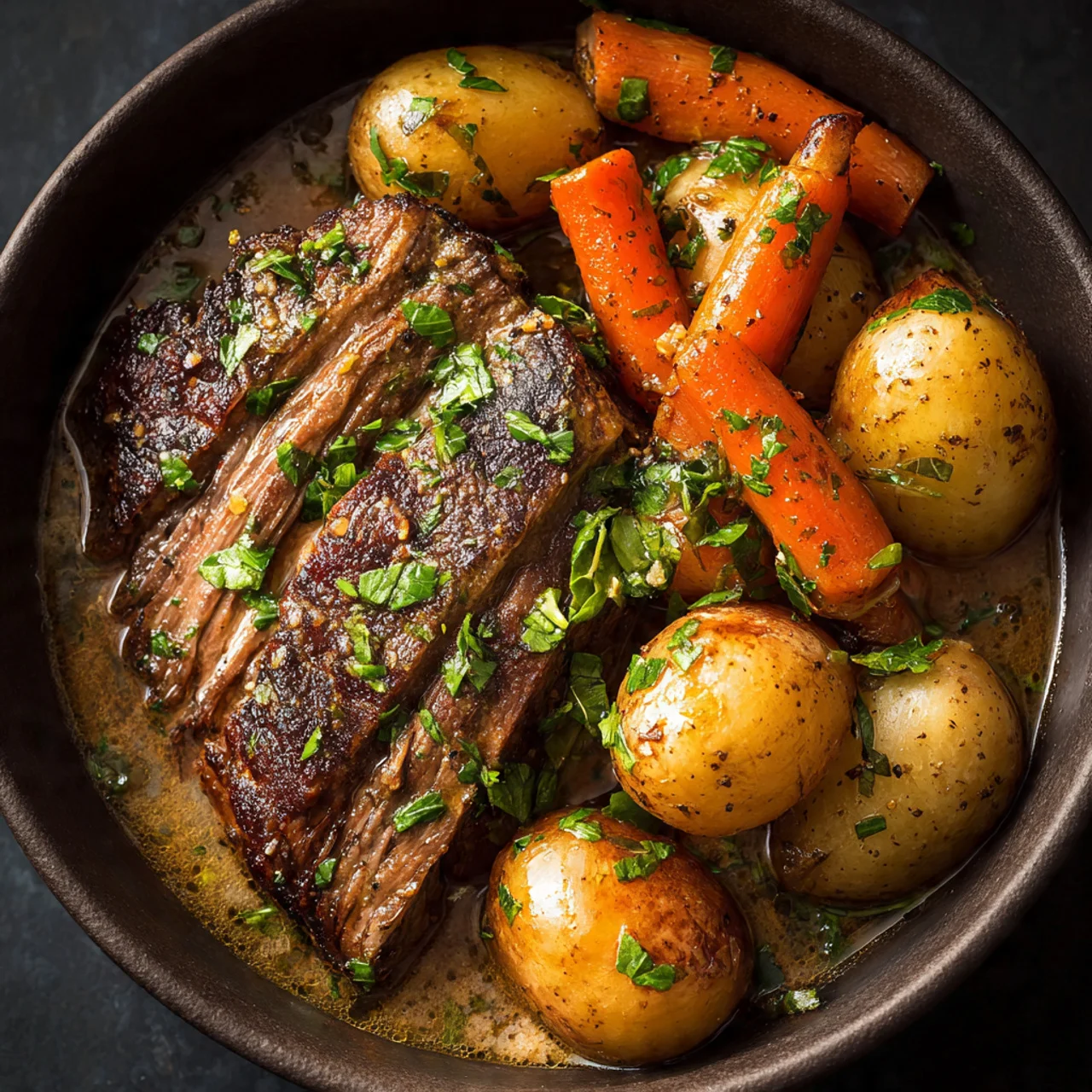
- Slice or shred the beef and serve with vegetables and pan juices.
Notes
- Chuck roast is ideal for pot roast; lean cuts will not become tender.
- Do not rush the cooking time—pot roast improves with slow heat.
- Store leftovers with gravy to keep meat moist.
- Reheat gently on the stove or in the oven with added broth if needed.