
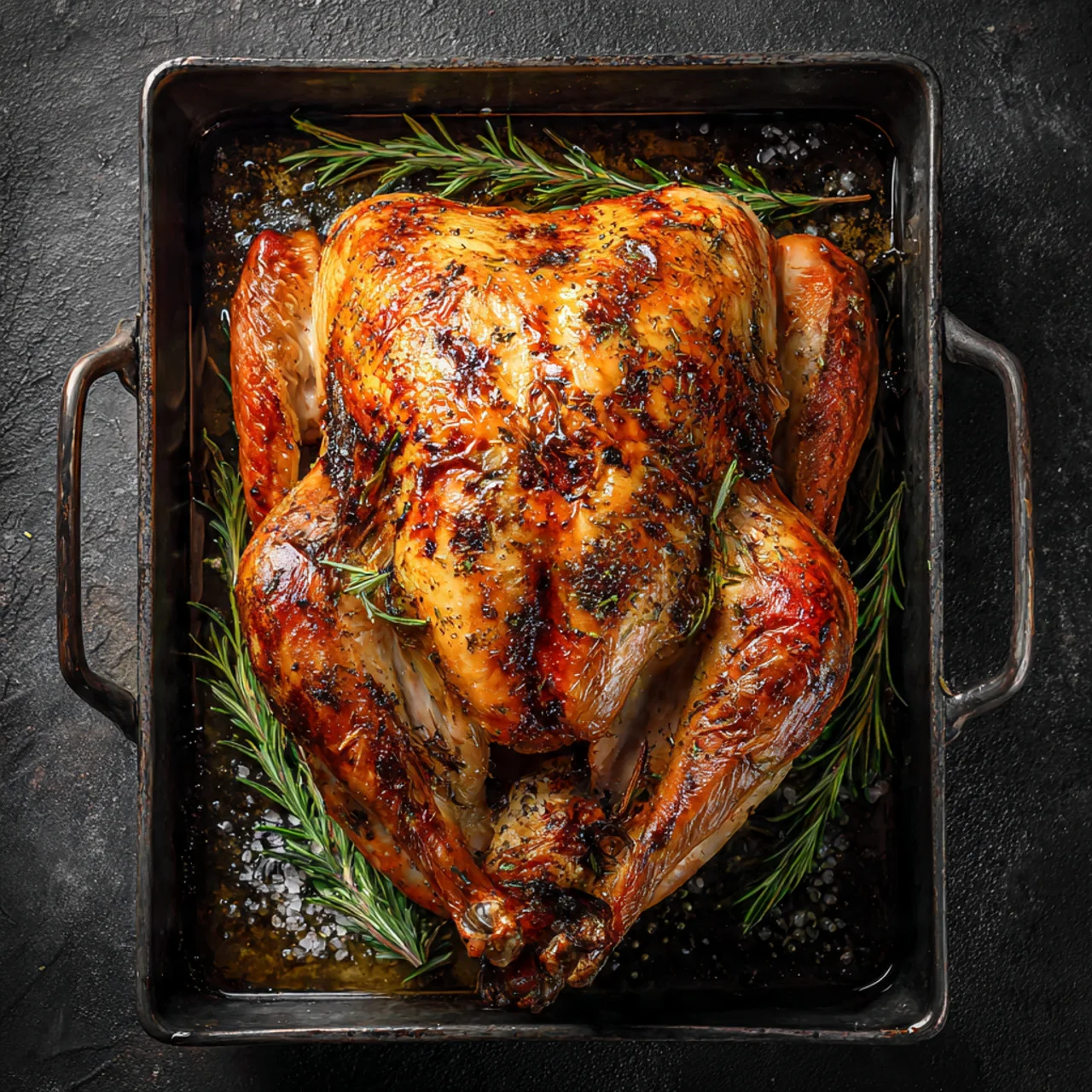
Dry brine turkey is a method of seasoning a whole turkey with salt and resting it uncovered in the refrigerator before roasting.
The salt seasons the meat deeply while drying the skin, resulting in a juicier turkey with crisp, golden skin and stronger natural flavor.
What Is Dry Brining, Really?
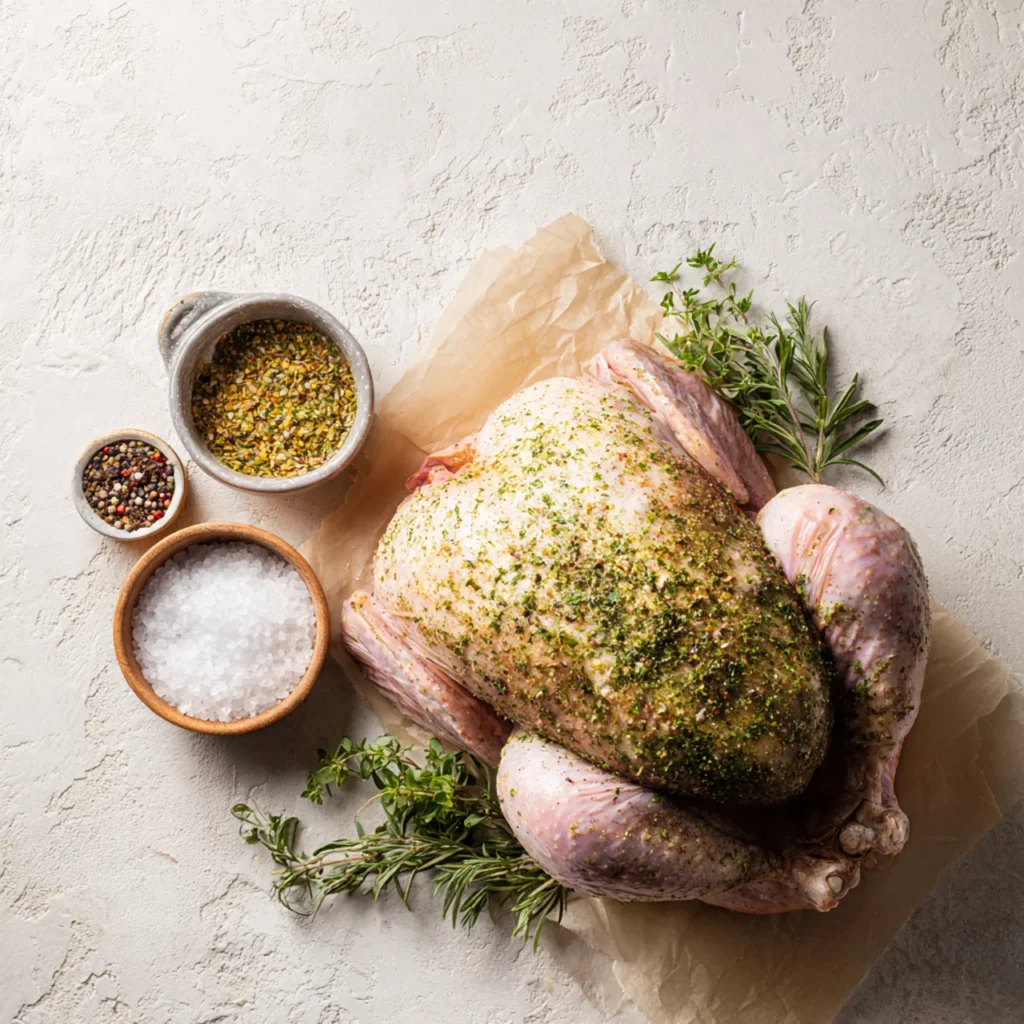
Dry brining is simply salting the turkey and letting it rest uncovered in the refrigerator for an extended period. There’s no water involved. The salt first draws moisture to the surface, then that salty liquid gets reabsorbed into the meat. Over time, it seasons the turkey from the inside out.
This process also dries the skin slightly, which is exactly what you want for crispiness. Wet brines add moisture, but they also make it harder to get that deep golden skin. Dry brining strikes the balance.
Direct opinion: dry brining is the best method for roasting a turkey if you care about flavor and texture equally.
Why Dry Brining Works So Well
There’s a little kitchen science happening here, but it’s nothing complicated.
- Salt seasons the meat deeply, not just the surface
- Proteins relax, helping the turkey retain moisture
- Dry skin equals better browning
- No added water means pure turkey flavor
The result is meat that tastes like turkey-just better.
Flavor and Texture You Should Expect
A properly dry-brined turkey should be:
- Juicy from breast to thigh, not just at the center
- Well-seasoned, without tasting salty
- Crispy-skinned, especially on the breast
- Clean-tasting, not waterlogged
If your turkey has ever been bland or dry, dry brining fixes both problems at once.
Ingredient
Turkey
Fresh or fully thawed turkey works best. Make sure it’s completely thawed so the salt can penetrate evenly.
Salt
Kosher salt is ideal because it’s easy to distribute evenly. Avoid fine table salt-it’s too concentrated and harder to control.
Optional Aromatics
Herbs, citrus zest, garlic, or spices can be added to the salt for surface aroma. They won’t penetrate deeply, but they perfume the skin beautifully.
Step-by-Step: How to Dry Brine a Turkey
Step 1: Pat the Turkey Dry
Remove the turkey from its packaging and pat it completely dry with paper towels. Moisture on the surface will slow down the dry brining process.
Step 2: Salt Generously
Sprinkle salt evenly over the entire turkey-breast, legs, thighs, wings, and cavity. Gently rub it in so it adheres.
Don’t forget the underside. Every part matters.
Step 3: Refrigerate Uncovered
Place the turkey on a rack set over a baking sheet and refrigerate uncovered. This allows air to circulate, drying the skin while the salt works its way in.
This step takes time-and that’s the magic.
Step 4: Rest and Roast
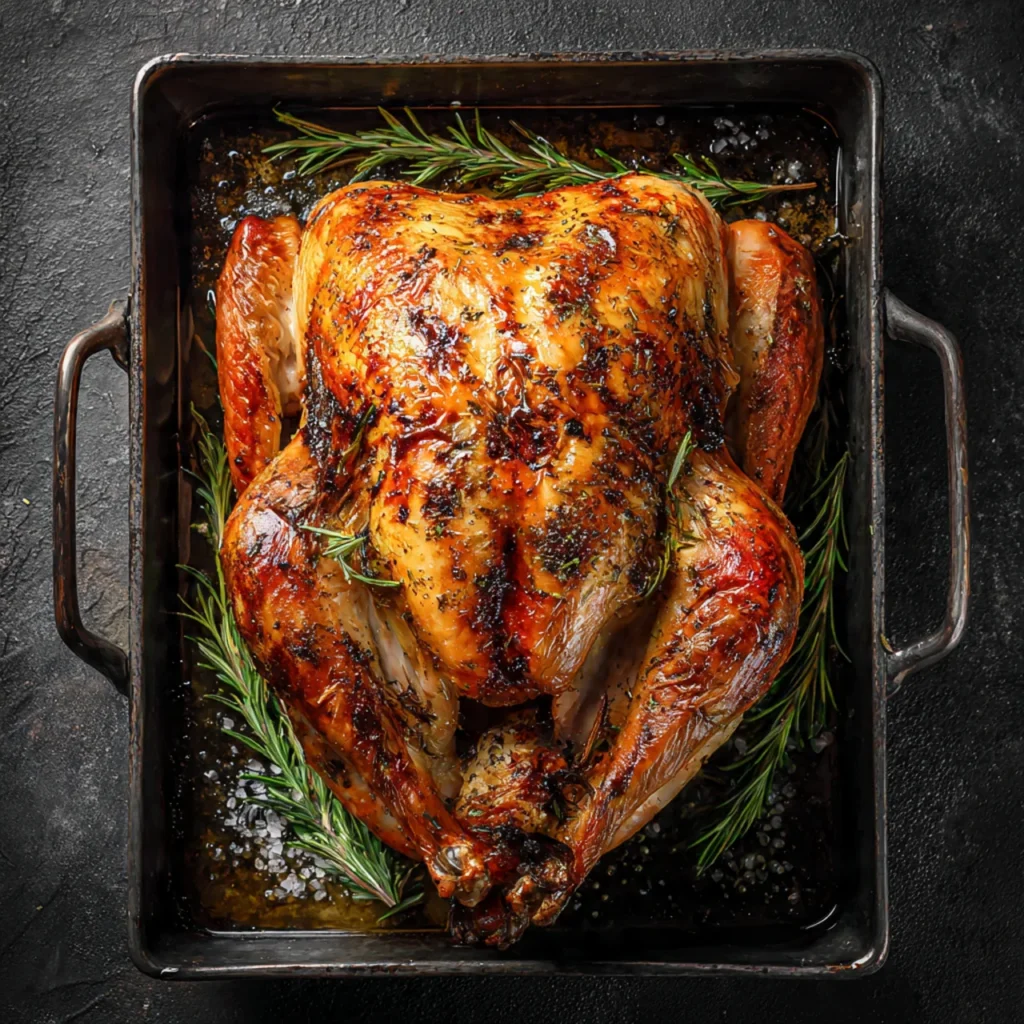
When ready to cook, there’s no need to rinse the turkey. Simply proceed with your favorite roasting method. The turkey is already seasoned and ready.
How Long Should You Dry Brine a Turkey?
Time is your friend here.
- Minimum: 24 hours
- Ideal: 48 hours
- Maximum: 72 hours
Anything less than a day won’t fully do the job. Longer than three days risks over-seasoning.
Common Mistakes to Avoid
- Rinsing the turkey: washes away seasoning
- Covering the turkey: traps moisture, softens skin
- Using table salt: too easy to over-salt
- Skipping the rack: air circulation matters
- Not planning ahead: this method rewards patience
Dry Brine vs Wet Brine
If you’ve wet-brined before, here’s the honest comparison:
- Dry brine: better flavor, crispier skin, less mess
- Wet brine: more water absorption, softer skin, bulky setup
Unless you’re deep-frying or smoking, dry brining wins for roasting.
Nutrition (Per Serving)
| Nutrient | Amount |
| Calories | 430 kcal |
| Protein | 52 g |
| Fat | 24 g |
| Saturated Fat | 7 g |
| Carbohydrates | 0 g |
| Sugar | 0 g |
| Sodium | ~680 mg |
Storage and Food Safety Tips
Once dry brined, the turkey should go straight into the oven when ready. If needed, it can rest uncovered in the fridge for several days as long as it stays cold and clean.
Always wash hands and surfaces after handling raw poultry.
FAQs
Will the turkey taste salty?
No, when done correctly, it tastes well-seasoned-not salty.
Can I add herbs or spices?
Yes, but think of them as surface flavor. Salt does the heavy lifting.
Do I still need to season before roasting?
No additional salt is needed. You can add butter or oil for richness.
Does this work for chicken too?
Absolutely. Dry brining works beautifully on all poultry.
What if my turkey is already injected or pre-brined?
Reduce the salt significantly or skip dry brining to avoid over-salting.
Dry Brine Turkey
Ingredients
Method
- Remove the turkey from packaging and pat completely dry with paper towels.
- Sprinkle kosher salt evenly over the entire turkey, including the breast, legs, thighs, wings, and cavity.
- Place the turkey on a rack set over a baking sheet and refrigerate uncovered for 24–48 hours.
- When ready to roast, remove the turkey from the refrigerator and let it sit at room temperature for 30–60 minutes.
- Roast using your preferred method until the internal temperature reaches doneness (165°F in the thickest part of the breast).
- Let the turkey rest for at least 20 minutes before carving.
Notes
- Do not rinse the turkey after dry brining; rinsing removes seasoning.
- Kosher salt is recommended—do not substitute with table salt.
- Dry brining works best for roasting; adjust salt if turkey is pre-brined or injected.
- Optional herbs add aroma but salt does the main seasoning work.