
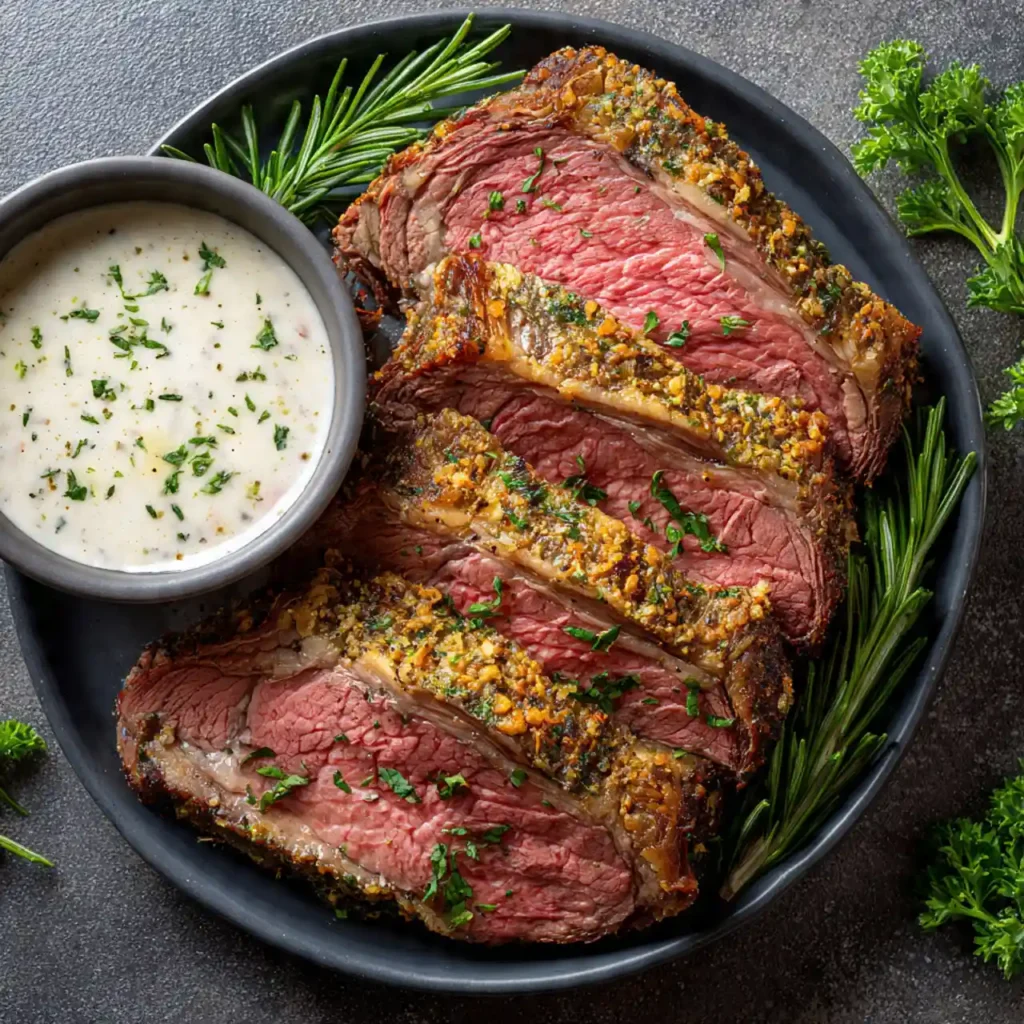
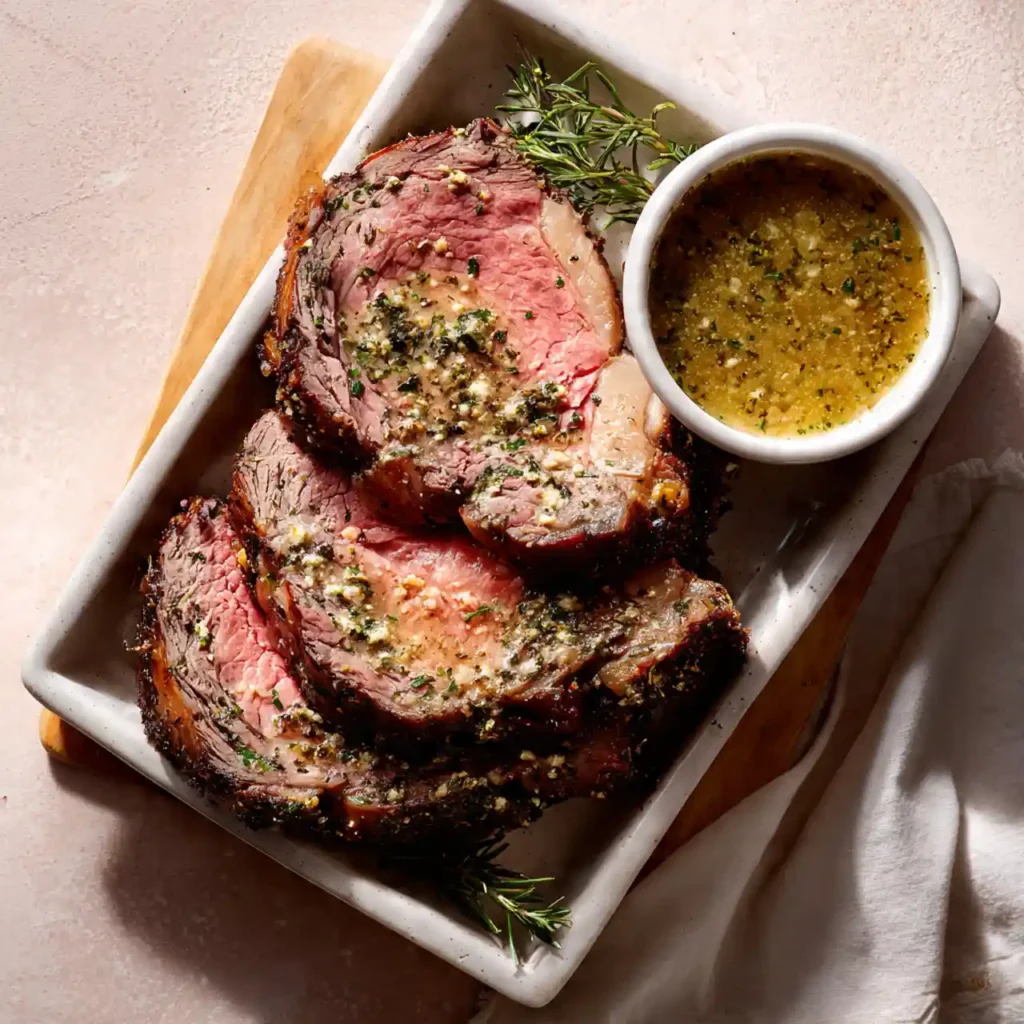
Garlic herb prime rib with au jus is a slow-roasted beef rib roast seasoned with garlic and herbs, served with its natural pan juices.
The low-and-slow roasting method keeps the meat tender and juicy, while the au jus enhances the rich beef flavor without overpowering it.
Why Prime Rib Is Worth the Effort
Prime rib has a reputation for being intimidating, but in reality, it’s surprisingly forgiving. The cut is well-marbled, which means it stays juicy even if you’re a little nervous about timing. The key is low, steady heat and letting the meat rest properly.
Direct opinion: prime rib isn’t hard-it just demands respect. Give it time and don’t rush the process, and it will reward you.
Flavor and Texture You Should Expect
A great garlic herb prime rib should be:
- Tender and juicy, never dry
- Rich and beefy, without being greasy
- Fragrant with garlic and herbs, not overpowering
- Finished with a silky au jus, not gravy
Each bite should feel indulgent but balanced.
Ingredient
Prime Rib Roast
Choose a well-marbled bone-in or boneless roast. Bone-in adds flavor and helps with even cooking, while boneless is easier to carve. Either works beautifully.
Garlic
Fresh garlic is essential. Roasting mellows its sharpness, turning it sweet and aromatic rather than harsh.
Herbs
Rosemary and thyme are classic. They stand up to the richness of the beef and perfume the meat as it roasts.
Fat
Butter or olive oil helps the herb mixture adhere and encourages a flavorful crust.
Au Jus Base
Beef drippings, broth, and a bit of seasoning are all you need. Au jus should enhance the beef, not compete with it.
Step-by-Step: How to Make Garlic Herb Prime Rib with Au Jus
Step 1: Bring the Roast to Room Temperature
Remove the prime rib from the refrigerator at least an hour before cooking. This helps it cook evenly and prevents a cold center.
Step 2: Season Generously
Mix garlic, herbs, fat, salt, and pepper into a paste. Rub it all over the roast, pressing it into every surface. This is where the flavor starts, so don’t be shy.
Step 3: Roast Low and Slow
Place the roast on a rack in a roasting pan and cook at a low temperature until it reaches your desired doneness. This gentle approach keeps the meat juicy from edge to center.
Step 4: Rest the Meat
Once the roast is done, remove it from the oven and let it rest, loosely tented with foil. This step is critical-resting allows the juices to redistribute so they stay in the meat instead of on the cutting board.
Step 5: Make the Au Jus
While the meat rests, pour the pan drippings into a saucepan. Add beef broth and simmer briefly, scraping up any browned bits. Strain if desired for a smoother finish.
Common Mistakes to Avoid
- Skipping rest time: leads to dry slices
- Overcooking: prime rib is best medium-rare to medium
- Under-seasoning: this is a large cut and needs salt
- Cranking the heat too high: dries the exterior
- Turning au jus into gravy: keep it light and clean
How to Serve Garlic Herb Prime Rib
Prime rib deserves simple sides that let it shine:
- Mashed or roasted potatoes
- Creamed spinach or green beans
- Yorkshire pudding or dinner rolls
Serve the au jus warm and let guests spoon it over their slices.
Nutrition (Per Serving)
| Nutrient | Amount |
| Calories | 520 kcal |
| Protein | 36 g |
| Fat | 42 g |
| Saturated Fat | 18 g |
| Carbohydrates | 2 g |
| Sugar | ~0 g |
| Sodium | 620 mg |
Storage and Reheating Tips
Prime rib leftovers are a gift.
- Store sliced meat with some au jus to keep it moist
- Reheat gently in a low oven or pan
- Avoid microwaving-it toughens the meat
Leftover prime rib also makes incredible sandwiches.
Variations You Can Try
Horseradish Prime Rib
Serve with creamy horseradish sauce for sharp contrast.
Crusted Prime Rib
Add coarse pepper or Dijon to the herb paste.
Garlic-Forward Version
Increase roasted garlic for deeper sweetness.
Boneless Prime Rib
Easier to carve and cooks slightly faster.
FAQs
What’s the best doneness for prime rib?
Medium-rare is classic-it highlights tenderness and flavor.
Can I cook prime rib ahead of time?
It’s best fresh, but gentle reheating works if needed.
Do I need a meat thermometer?
Yes. It’s the easiest way to avoid overcooking.
Is au jus the same as gravy?
No. Au jus is thinner and meat-forward, without flour.
How much prime rib per person?
About ¾ to 1 pound per person with the bone.
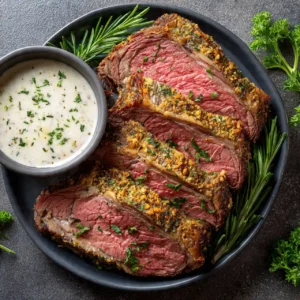
Garlic Herb Prime Rib with Au Jus
Ingredients
Method
- Remove the prime rib from the refrigerator 1 hour before cooking. Preheat oven to 325°F (165°C).
- In a small bowl, mix garlic, rosemary, thyme, olive oil (or butter), salt, and pepper.
- Rub the herb mixture evenly over the entire roast.
- Place the roast on a rack in a roasting pan and cook until the internal temperature reaches desired doneness (about 120–125°F for medium-rare).
- Remove from oven, tent loosely with foil, and let rest for 20 minutes.
- Meanwhile, pour pan drippings into a saucepan and add beef broth. Simmer for 5–10 minutes, scraping up browned bits.
- Slice the prime rib and serve with warm au jus.
Notes
- Use a meat thermometer for best results; prime rib is easiest to overcook.
- Medium-rare is traditional and highlights tenderness.
- Resting the roast is essential to keep it juicy.
- Leftovers store well for up to 3 days and are excellent for sandwiches