

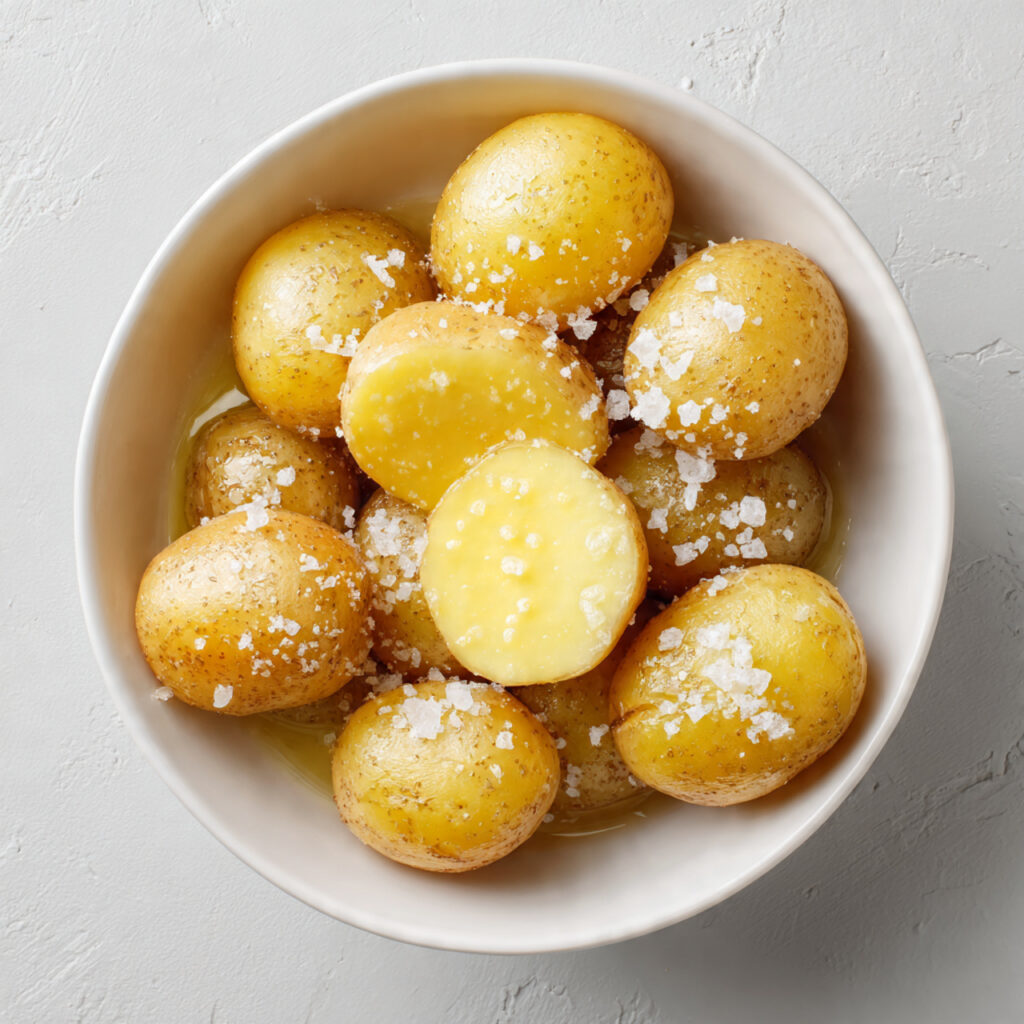
Syracuse Salt Potatoes are small white potatoes boiled in extremely salty water, then served hot with melted butter.
The heavy salt creates a thin crust on the skin while keeping the inside creamy and evenly seasoned.
Originally from upstate New York, this method dates back to the 1800s when salt workers boiled potatoes in leftover brine. Today, salt potatoes are a staple at Syracuse-area cookouts, known for their simple ingredients, rich texture, and nostalgic appeal.
What Are Syracuse Salt Potatoes?
Syracuse salt potatoes date back to the 1800s, when salt workers in central New York would boil potatoes in leftover salt brine during lunch breaks. The brine was far saltier than seawater, but instead of ruining the potatoes, it created something unique.
The heavy salt content slightly dehydrates the potato’s surface, forming a thin crust. Inside, the potatoes steam and turn incredibly creamy. Once drained, they’re split open and flooded with butter, which melts instantly into every crack.
No garnish needed. No upgrades required.
Why This Recipe Works
Salt potatoes succeed because of contrast and chemistry, not complexity.
- Extremely salty water seasons the potato evenly
- Thin skins trap moisture inside
- Butter balances the salt and adds richness
- Simple prep keeps the texture perfect
If you reduce the salt too much or use the wrong potatoes, you lose the magic.
Flavor and Texture You Should Expect
When done right, Syracuse salt potatoes are:
- Creamy and fluffy inside
- Lightly salty, never bitter
- Silky once butter melts in
- Comforting without being heavy
They should not taste like salt bombs. If they do, something went wrong.
Ingredient Insights
Potatoes
Small white potatoes are the gold standard. Their thin skins and waxy-to-creamy texture are essential. Baby Yukon Golds can work in a pinch, but large russet potatoes are a poor substitute—they fall apart and don’t develop the right crust.
Salt
This is not the place for table salt. Traditionally, coarse salt or salt made specifically for salt potatoes is used. The grain size matters—it dissolves slower and distributes more evenly.
Butter
Salt potatoes demand real butter. Margarine, oil, or butter substitutes flatten the flavor. Melted butter should be poured generously, not drizzled timidly.
Step-by-Step: How to Make Syracuse Salt Potatoes
Step 1: Prepare the Potatoes
Rinse the potatoes thoroughly to remove any dirt, but do not peel them. The skins help hold everything together and create the signature texture.
Step 2: Create the Salt Water
Fill a pot with water and add a heavy amount of coarse salt—much more than you’d ever use for pasta. The water should taste aggressively salty, similar to brine.
This isn’t a mistake. This is the point.
Step 3: Boil the Potatoes
Add the potatoes to the cold salt water, then bring it to a boil. Cook uncovered until the potatoes are fork-tender but not splitting. As they cook, salt crystals will cling to the skins.
Step 4: Drain and Dry
Drain the potatoes completely and let them sit in the hot pot for a minute or two. This allows excess moisture to evaporate and the salt crust to set slightly.
Do not rinse them.
Step 5: Serve With Butter
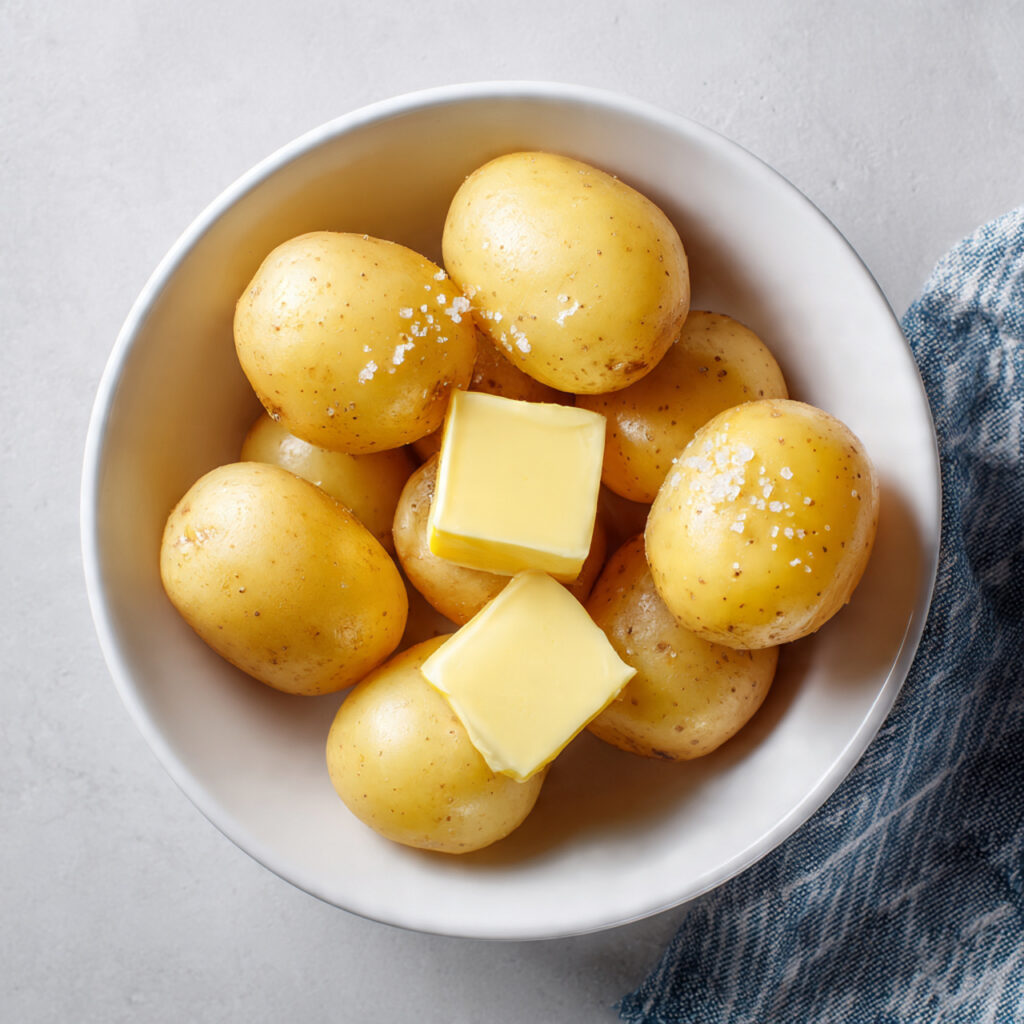
Split the potatoes open immediately and pour melted butter over the top. Serve hot. The butter should pool, soak in, and coat everything.
Common Mistakes That Ruin Salt Potatoes
- Using too little salt: You’ll get bland potatoes, not salt potatoes
- Using table salt: It dissolves too fast and seasons unevenly
- Overcooking: Potatoes should be creamy, not broken
- Rinsing after boiling: This washes away the salt crust
- Skimping on butter: Butter is half the recipe
How to Serve Syracuse Salt Potatoes
Traditionally, salt potatoes are served simply with melted butter and nothing else. They pair perfectly with grilled meats, corn on the cob, burgers, or hot dogs.
If you want extras, keep them optional:
- Fresh cracked black pepper
- Chopped parsley (purely visual)
- Sour cream on the side
But understand this: purists eat them plain.
Storage and Reheating Tips
Salt potatoes are best eaten fresh, but leftovers can be stored in the refrigerator for up to two days.
To reheat:
- Steam gently or microwave with a damp paper towel
- Add fresh butter after reheating
Avoid reheating in boiling water-it strips flavor and texture.
Freezing is not recommended. The texture suffers badly.
Variations (Use With Caution)
Classic Syracuse Style
White potatoes, heavy salt, butter only. This is the benchmark.
Garlic Butter Version
Melt garlic into the butter, not the water. Never add garlic to the pot.
Herb Butter
Chives or parsley in the butter are acceptable for modern tables, though not traditional.
Lighter Version
You can reduce butter slightly, but don’t touch the salt ratio—or you’re just making boiled potatoes.
FAQs
Why are salt potatoes so salty but not overpowering?
The salt concentrates on the skin while the inside stays creamy and balanced.
Can I use regular potatoes instead of small white ones?
You can, but the texture won’t be the same. Small white potatoes are strongly recommended.
Is this the same as boiling potatoes in salted water?
No. The salt level is dramatically higher and changes the structure of the potato.
Do I really need that much salt?
Yes. Less salt means no crust and uneven seasoning.
Are Syracuse salt potatoes healthy?
They’re simple and filling, but this is comfort food—not diet food.

Syracuse Salt Potatoes
Ingredients
Method
- Rinse the potatoes thoroughly and place them in a large pot. Do not peel.
- Add enough water to fully cover the potatoes, then add the salt. The water should taste very salty, similar to brine.
- Bring the pot to a boil over high heat and cook uncovered until the potatoes are fork-tender, about 20–25 minutes.
- Drain the potatoes completely and let them rest in the hot pot for 1–2 minutes so excess moisture evaporates. Do not rinse.
- Split the potatoes open and serve immediately with melted butter poured over the top.
Notes
- Use small white potatoes for authentic texture and flavor.
- Do not reduce the salt; the high concentration is essential for the creamy interior and light crust.
- Serve immediately for best results. Leftovers can be reheated gently and topped with fresh butter.